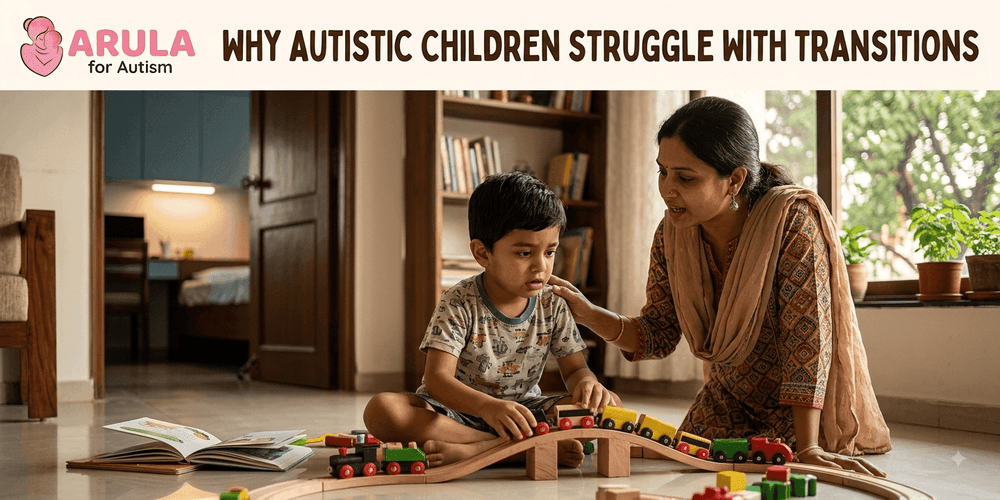
Transitions refer to the process of moving from one activity, environment, routine, or expectation to another. For many children, these changes happen automatically with little thought. However, for autistic children, transitions can require significant emotional, sensory, and cognitive effort.
AF
ARULA for Autism
· 8 min read
Understanding Change, Regulation, and Predictability in Autism
Definition
Transitions refer to the process of moving from one activity, environment, routine, or expectation to another.
In everyday life, transitions happen constantly. Children are expected to:
stop playing and come to eat
leave home for school
move from one classroom activity to another
end screen time
get ready for bed
shift between people, places, and routines
For many children, these changes happen automatically with little thought. However, for autistic children, transitions can require significant emotional, sensory, and cognitive effort.
Within developmental approaches such as ARULA, difficulties with transitions are not viewed as stubbornness, poor behavior, or intentional refusal. Instead, they are understood as challenges related to regulation, predictability, processing, flexibility, and emotional adjustment.
“It’s just time to stop playing and come for dinner.”
But for an autistic child, that moment may involve many different demands happening at once.
The child may need to:
stop a preferred activity suddenly
shift attention away from something comforting or regulating
process verbal instructions
tolerate uncertainty about what comes next
manage sensory changes in the environment
emotionally prepare for a new expectation
When all of these processes happen together, transitions can begin to feel overwhelming.
This is why some children may:
cry when asked to stop an activity
run away during transitions
ignore instructions
freeze or shut down
become angry or distressed
experience meltdowns when routines change unexpectedly
These reactions are often signs that the child is struggling to regulate and adapt—not signs that they are trying to be difficult.
For many parents, understanding this difference can completely change the way transition difficulties are viewed.
Transitions Are Often About Regulation, Not Obedience
One of the most important things families can understand is that transition difficulties are rarely only behavioral.
In many cases, the child’s nervous system is working very hard simply to cope with change.
Autistic children often rely heavily on predictability and familiar routines to feel emotionally safe. Predictable activities help reduce uncertainty and create a sense of control within an overwhelming world.
When that predictability suddenly changes, the child may feel emotionally unprepared.
This does not mean the child “cannot handle change” forever. It means the process of adjusting to change may require more support, preparation, and regulation than it does for other children.
When transitions are approached through understanding rather than punishment, children often begin to cope more successfully over time.
What ARULA Observes in Transition Difficulties
ARULA looks beyond whether a child simply “cooperates” during transitions.
Instead, the focus is on understanding:
what the child experiences during change
which underlying developmental processes are affected
what support helps the child transition more comfortably
This shifts the question from:
“Why is the child refusing?”
to:
“What is making this transition difficult?”
1. Difficulty Shifting Attention
Many autistic children become deeply focused on activities.
This intense focus is not necessarily unhealthy. In fact, familiar activities often help children feel calm, engaged, and regulated.
However, when a child is highly absorbed in something predictable or enjoyable, suddenly stopping can feel emotionally jarring.
ARULA observes:
how strongly the child becomes engaged in activities
difficulty disengaging attention
emotional reactions when interrupted
response to verbal prompting or preparation
Some children may appear to “ignore” adults during transitions. Often, they are still processing the shift internally.
Others may react strongly because the interruption feels abrupt or emotionally overwhelming.
This is especially common during transitions away from:
screens
repetitive play
preferred toys
sensory activities
highly structured routines
The difficulty is often related to flexibility and regulation rather than intentional defiance.
2. Dependence on Predictability and Routine
Predictability helps many autistic children feel emotionally safe.
Knowing what will happen next reduces uncertainty and allows the child to prepare mentally and emotionally.
ARULA observes:
dependence on fixed routines
distress when routines change
flexibility with schedule variations
comfort with unfamiliar situations
Some children become distressed even by small changes, such as:
taking a different route home
changing the order of routines
moving unexpectedly between activities
visitors entering the home unexpectedly
To adults, these changes may appear minor.
To the child, they may feel like a sudden loss of structure and emotional safety.
Routine is often regulating because it makes the environment feel understandable and manageable.
3. Emotional Regulation During Change
Transitions require emotional adjustment.
Even adults sometimes struggle when interrupted unexpectedly, rushed suddenly, or asked to stop something enjoyable.
For autistic children, these emotional demands can feel even more intense.
ARULA looks at:
frustration tolerance
emotional recovery after interruptions
dependence on adult support during transitions
intensity of emotional reactions
Some children experience transitions as:
loss of control
emotional overload
uncertainty
anxiety
unfinished engagement
When overwhelm increases, behaviors such as crying, yelling, aggression, or meltdowns may occur.
These reactions are usually signs that the child’s nervous system is overloaded.
Children often need co-regulation before they can develop self-regulation.
4. Sensory Changes Across Environments
Transitions often involve sensory changes that adults may not immediately notice.
For example:
leaving a quiet room for a noisy classroom
moving from home into crowded public spaces
transitioning from outdoor play to indoor structure
sitting down for meals after active movement
ARULA observes the child’s response to:
noise
lighting
movement
crowds
touch
sensory unpredictability
Some children resist transitions because they are anticipating sensory discomfort.
Others become dysregulated because the sensory shift itself feels overwhelming.
When sensory needs are understood and supported, transitions often become easier naturally.
5. Processing Time and Mental Preparation
Some autistic children require additional processing time before they can shift activities successfully.
ARULA observes:
how quickly the child responds to instructions
ability to anticipate what comes next
need for reminders or repetition
understanding of routines and expectations
A child may appear non-compliant when they are actually:
still processing language
mentally preparing for the transition
emotionally adjusting to change
Fast-paced demands can overwhelm children who require more time to regulate and process information.
Preparation often helps reduce this stress significantly.
Why Transition Skills Are Important
Transition skills affect many areas of daily life.
Children who gradually become more comfortable with transitions are often better able to:
participate in school routines
tolerate changes in plans
move between environments
engage in social activities
manage everyday expectations more independently
Transitions also affect:
emotional regulation
family stress
confidence
participation in community settings
When transitions consistently feel overwhelming, daily life can become exhausting for both the child and family.
Supporting transitions is therefore not simply about improving “behavior.” It is about helping the child feel safer, more regulated, and more capable within everyday life.
Common Transition Challenges Families Experience
Many families feel emotionally exhausted by transitions because difficult moments happen repeatedly throughout the day.
Parents may experience:
constant negotiation around routines
fear of meltdowns in public places
stress around school preparation
difficulty leaving preferred activities
emotional burnout from repeated struggles
Over time, some parents begin to blame themselves or feel that they are “doing something wrong.”
However, transition difficulties are extremely common in autistic children.
These challenges are often connected to:
sensory processing
executive functioning
anxiety
emotional regulation
processing speed
predictability needs
Understanding the underlying reasons behind these struggles often helps families respond with greater confidence and less guilt.
How ARULA Methods Support Transitions
ARULA approaches transition difficulties through understanding, emotional safety, and gradual developmental support rather than pressure or punishment.
1. Building Predictable Routines
Consistent routines help children:
anticipate what comes next
feel emotionally safer
prepare mentally for change
Predictability reduces uncertainty and supports regulation.
When children know what to expect, transitions often become less threatening.
2. Preparing Children Before Transitions
Many children transition more comfortably when given time to prepare.
ARULA encourages:
verbal reminders
countdowns
visual schedules
transition warnings
consistent language
Preparation gives the nervous system time to adjust gradually rather than suddenly.
3. Supporting Regulation During Difficult Moments
Children manage transitions more successfully when they feel emotionally regulated.
ARULA considers:
sensory comfort
fatigue
overwhelm
environmental stress
emotional state of caregivers
Sometimes reducing sensory or emotional overload improves transitions more effectively than repeated verbal instructions.
4. Breaking Large Transitions Into Smaller Steps
Large demands often feel more manageable when broken down.
For example:
first clean up toys
then put on shoes
then walk to the door
Smaller steps reduce emotional and cognitive overload.
This also helps children experience more success during transitions.
5. Using Co-Regulation
Children often regulate through the emotional state of adults around them.
When adults remain calm, predictable, and emotionally available, children are more likely to regain regulation themselves.
ARULA emphasizes:
calm communication
reassurance
emotional safety
reduced pressure
connection during stressful moments
Children generally transition more successfully when they feel supported rather than controlled.
6. Supporting Flexibility Gradually
Flexibility develops over time.
Most children do not become comfortable with transitions immediately.
ARULA focuses on:
small successful changes
gradual tolerance for unpredictability
emotional recovery
confidence-building through repetition
The goal is not perfect compliance, but helping the child feel increasingly safe and capable during change.
What Progress Often Looks Like
Progress with transitions is usually gradual.
It may begin with:
needing fewer reminders
recovering more quickly after distress
tolerating small routine changes
transitioning with less emotional intensity
accepting preparation and support more easily
Some days may still feel difficult.
Progress is rarely perfectly consistent, especially during periods of stress, illness, fatigue, or environmental change.
Small improvements still matter.
Over time, repeated experiences of safe and supported transitions help children build greater emotional resilience and adaptability.
Conclusion
Transitions are not simply about moving from one activity to another.
They involve regulation, predictability, flexibility, emotional adjustment, sensory processing, and nervous system readiness.
For autistic children, difficulties with transitions often reflect overwhelm rather than intentional refusal or oppositional behavior.
Within the ARULA framework, transition challenges are understood through the lens of emotional safety, developmental readiness, and participation. By reducing unpredictability, supporting regulation, and preparing children gradually for change, transitions often become more manageable over time.
Most importantly, children do not need to be forced through transitions in order to grow.
When children feel understood, supported, and emotionally safe, they gradually develop greater confidence, flexibility, and participation within everyday life.
ARULA for Autism·
ARULA's Brain Gymming Exercises: Turning Everyday Play into Opportunities for Brain Development
ARULA's Brain Gymming exercises can create meaningful learning opportunities for autistic children, supporting attention, working memory, inhibitory control, cognitive flexibility, motor coordination, and social communication. Through child-centred activities and parent-mediated approaches, familiar routines can encourage learning, communication, independence, and participation in daily life.
Every Child Deserves
The Opportunity To Thrive.
Every child has potential. Sometimes they simply need someone who believes in them deeply enough to help it emerge. Take the first step today.