What Are Repetitive Behaviors?
Repetitive behaviors are actions, interests, or routines that are done in a similar way again and again. In autism, they commonly include repetitive movements (such as hand flapping or rocking), a strong preference for sameness and routines, deep and focused interests, and unique responses to sensory experiences like sounds, textures, or lights (Leekam et al., 2011).
These behaviours vary widely. Some are subtle, some are more noticeable, and they can change across age, setting, and mood.
Repetitive Behaviours in Play
Play is one of the places where repetition is most visible. A child may:
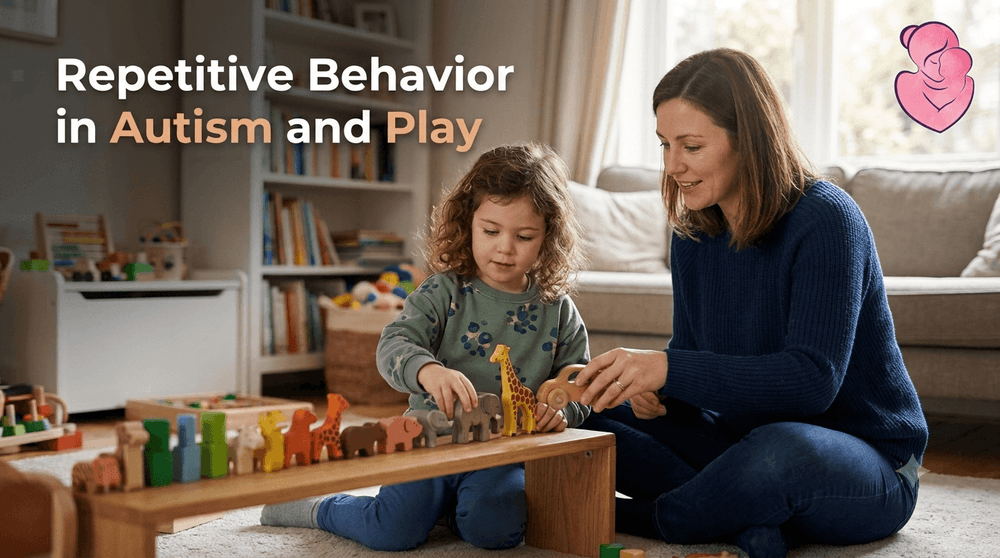
- Line up or sort toys by colour, shape, or size.
- Spin wheels, open and close doors, or switch lights on and off.
- Repeat the same game, storyline, or phrases from a favourite show.
- Focus on one part of a toy rather than the whole toy.
Research suggests that autistic children may show more functional or repetitive play and less spontaneous pretend play than their peers. However, this is not the full picture. Play skills are influenced by language, developmental level, and the support available, and many children show richer play when adults join in and follow their lead (Jarrold et al., 1993; Kasari et al., 2012).
Why Might Repetition Matter?
For many autistic people, repetition serves a purpose. Autistic adults describe repetitive movements, or stimming, as helping them manage emotions, cope with sensory input, focus, and express joy (Kapp et al., 2019).
In play, repetition can bring predictability in a world that may feel overwhelming, and comfort when the child is tired, anxious, or excited. It can also give a sense of mastery, since knowing exactly what will happen next feels good.