Blog
ARULA's Brain Gymming Exercises: Turning Everyday Play into Opportunities for Brain Development
ARULA's Brain Gymming exercises can create meaningful learning opportunities for autistic children, supporting attention, working memory, inhibitory control, cognitive flexibility, motor coordination, and social communication. Through child-centred activities and parent-mediated approaches, familiar routines can encourage learning, communication, independence, and participation in daily life.
ARULA for Autism
· 5 min read
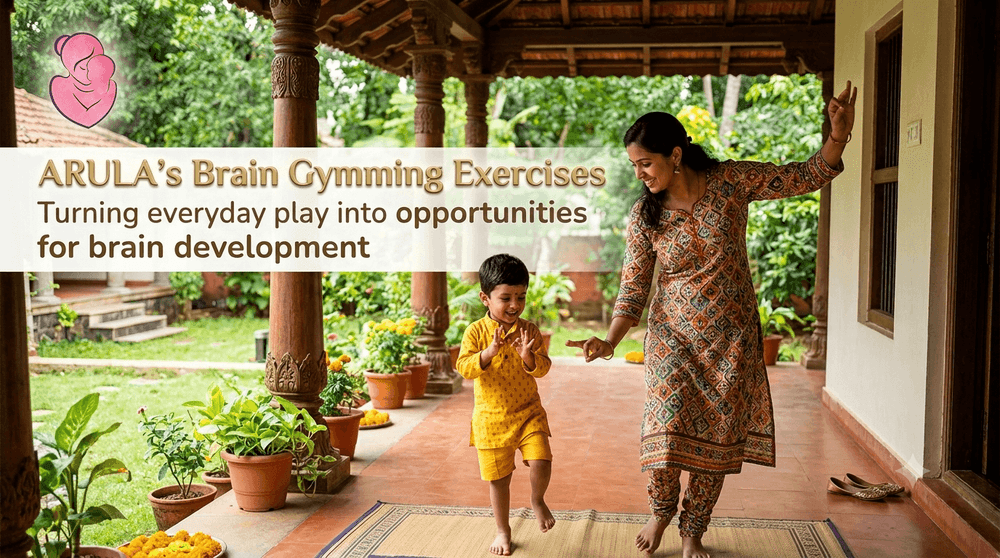
A child searching for a hidden toy, following a simple instruction, taking turns during a ball game, or imitating a parent's movements is doing much more than playing. These everyday experiences can provide opportunities to practise cognitive, motor, communication, and self-regulation skills. For a child, learning opportunities can be particularly meaningful when they are embedded in familiar routines, motivating activities, and supportive relationships.
The term brain gymming is often used informally to describe activities intended to engage the brain through movement, memory tasks, attention exercises, and problem-solving. The key is not to perform exercises simply for the sake of exercising the brain. It is to create meaningful opportunities for children to learn, communicate, explore, and participate more independently in everyday life.
Why Combine Cognitive Activities with Movement and Play?
Research on physical activity and executive-function interventions in autistic children and adolescents suggests potential benefits for selected outcomes, including aspects of inhibitory control, cognitive flexibility, and motor performance.
Similarly, Naturalistic Developmental Behavioral Interventions (NDBIs) use children's interests, play, and everyday routines to support developmental and social-communication goals. Parent-mediated approaches can help caregivers create learning opportunities throughout the day rather than limiting practice to scheduled intervention sessions.
Six Areas That Can Be Practiced Through Everyday Activities
1. Attention: Learning to Notice and Focus
Attention allows children to orient towards relevant information, maintain engagement, and respond to important cues in their environment.
For children with autism, competing sensory information, the complexity of an activity, or the way an instruction is delivered may influence their ability to participate. The goal should not simply be to increase the time a child sits quietly. It should be to support meaningful engagement with people, objects, and activities.