Blog
Sensory Processing Issues in Autism: What Parents Need to Know
One of the most common yet least understood challenges faced by children with autism is sensory processing difficulties. Parents often notice that their child reacts very strongly to sounds, textures, or lights, or sometimes seems under-responsive to things that most people would find uncomfortable.
ARULA for Autism
· 4 min read
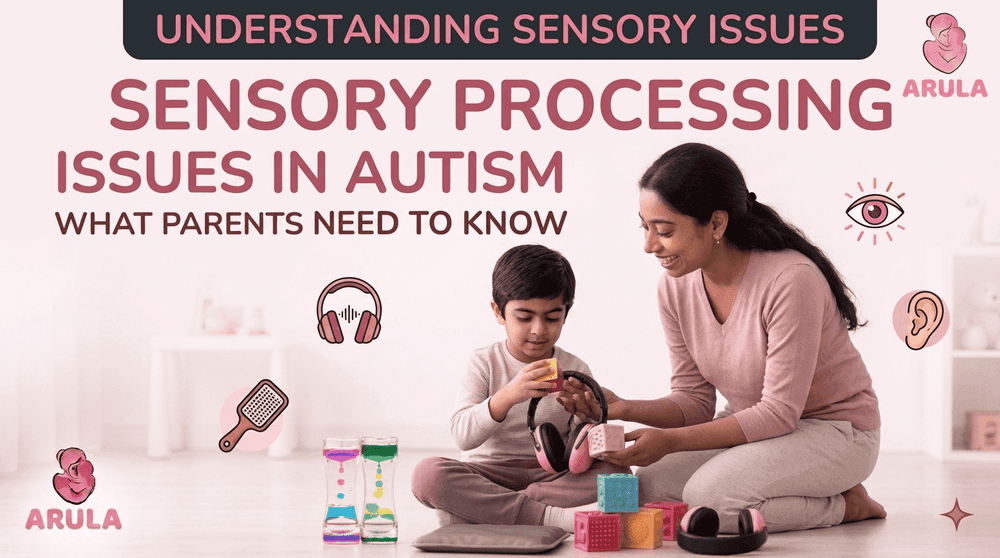
One of the most common yet least understood challenges faced by children with autism is sensory processing difficulties. Parents often notice that their child reacts very strongly to sounds, textures, or lights, or sometimes seems under-responsive to things that most people would find uncomfortable. These behaviors are not “bad habits” or “tantrums”—they are signs of how the child’s brain processes sensory information differently.
Understanding sensory processing issues is key to helping your child feel safe, regulated, and able to participate in daily life.
What is Sensory Processing?
Sensory processing refers to how the brain receives, interprets, and responds to information from the senses. We usually think of the five basic senses (sight, hearing, touch, taste, smell), but there are actually eight senses that play a role:
- Sight (visual)
- Hearing (auditory)
- Touch (tactile)
- Smell (olfactory)
- Taste (gustatory)
- Balance (vestibular)
- Body awareness (proprioception)
- Internal sensations (interoception) such as hunger, thirst, or the need to use the restroom
When sensory processing works smoothly, children can adapt to their environment. But for many autistic children, sensory messages get overloaded, under-registered, or mixed up—leading to unusual responses.