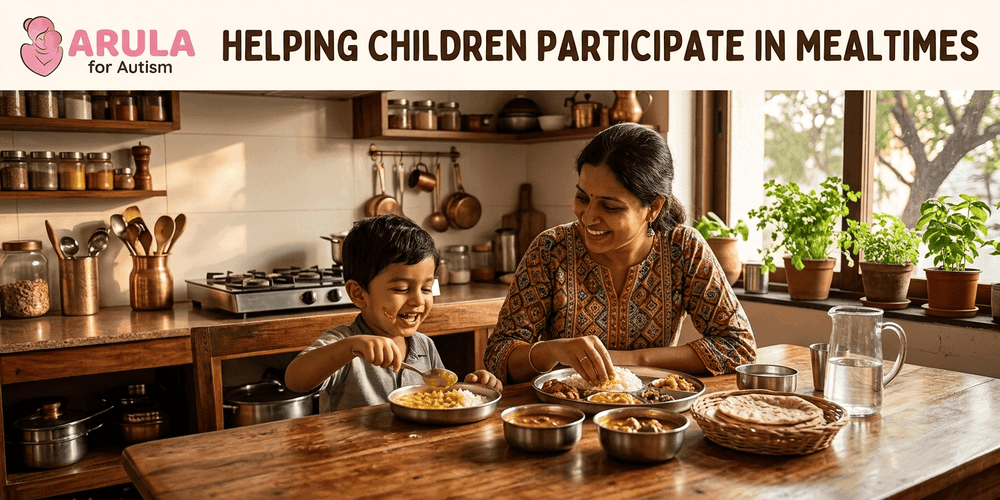
Mealtime participation is a complex developmental activity that involves sensory processing, regulation, motor coordination, communication, attention, and emotional comfort. For many autistic children, mealtimes can feel overwhelming rather than calming or social. As a result, difficulties around eating are often linked to underlying developmental processes rather than refusal alone.
AF
ARULA for Autism
· 6 min read
Understanding Eating, Regulation, and Family Participation in Autism
Definition
Mealtime participation refers to a child’s ability to engage in eating routines comfortably and meaningfully within everyday life. This includes:
sitting during meals
tolerating different foods and textures
participating in family mealtime routines
eating with increasing independence
At first glance, mealtime difficulties may appear to be simply about “picky eating” or poor behavior. In reality, eating is a highly complex developmental activity that involves sensory processing, regulation, motor coordination, communication, attention, and emotional comfort.
For many autistic children, mealtimes can feel overwhelming rather than calming or social. As a result, difficulties around eating are often linked to underlying developmental processes rather than refusal alone.
Within developmental frameworks such as ARULA, mealtime participation is understood as a functional outcome that reflects how comfortably a child can engage in daily routines and shared family experiences.
Understanding Mealtime Participation in Autism
Eating is not just a nutritional task. It is also a sensory, emotional, motor, and social experience.
For autistic children, managing all of these demands simultaneously can become difficult.
A child leaving the table repeatedly, refusing certain foods, or becoming distressed during meals is often communicating discomfort, overload, or difficulty with regulation. These behaviors are usually not intentional attempts to be “difficult.”
Research consistently shows that autistic children experience feeding and mealtime challenges at higher rates than neurotypical children, particularly in areas related to sensory sensitivity and food selectivity (Bandini et al., 2010; Cermak et al., 2010).
What ARULA Observes in Mealtime Participation
ARULA looks beyond whether a child simply “eats enough” and instead asks:
How does the child experience mealtimes?
What makes participation difficult?
What supports help the child feel more comfortable and engaged?
1. Sitting Tolerance
Remaining seated during meals requires regulation, body awareness, and tolerance for structure.
ARULA observes:
how long the child comfortably remains seated
whether movement-seeking behaviors increase during meals
signs of restlessness, distress, or overwhelm
dependence on distractions or prompting
Some children leave the table frequently because:
movement helps them regulate
sitting feels physically uncomfortable
the environment feels overstimulating
mealtimes feel demanding or stressful
Short sitting periods do not necessarily reflect refusal or poor behavior. In many cases, the child’s nervous system may not yet be ready for prolonged structured participation.
Over time, with predictable routines and emotional safety, sitting tolerance often improves gradually.
2. Food Rigidity and Restricted Eating
Many autistic children strongly prefer certain foods while consistently avoiding others.
ARULA observes:
preference for specific textures, colors, temperatures, or brands
emotional reactions to unfamiliar foods
rigidity around food presentation
tolerance for variety and change
Food selectivity is often closely connected to sensory processing and predictability.
For some children:
crunchy foods may feel safer than soft foods
mixed textures may feel overwhelming
unfamiliar smells or appearances may create anxiety
Preferred foods are often experienced as predictable and emotionally safe.
A child refusing unfamiliar foods is frequently responding to sensory discomfort or uncertainty, rather than intentionally resisting.
3. Sensory Processing During Meals
Mealtimes involve intense sensory input.
ARULA looks at the child’s response to:
smells
textures
sounds
lighting
temperature
proximity to others during meals
Children may become overwhelmed by:
strong food smells
sticky or wet textures
chewing sounds
crowded dining environments
visual clutter
When sensory discomfort increases, participation often decreases.
Some children may:
avoid certain foods entirely
become distressed during meals
eat only in specific environments
require movement or breaks to regulate themselves
Understanding sensory experiences is essential before expecting flexibility around eating.
4. Participation in Family Mealtime Routines
Mealtime participation is not only about food intake. It also reflects a child’s ability to engage in shared family routines.
ARULA observes:
comfort sitting with family members
participation in shared routines
tolerance for conversation and social interaction
ability to remain emotionally regulated during meals
For some children, eating with the family may initially feel overwhelming due to the combination of sensory and social demands.
Participation may begin gradually:
sitting at the table briefly
remaining nearby during meals
tolerating shared routines without distress
These small steps reflect meaningful progress toward participation and comfort.
Why Mealtime Participation Is Important
1. Supporting Daily Functioning
Mealtimes are a central part of everyday life.
Participation supports:
routine-building
adaptive functioning
independence
family involvement
Children who feel more comfortable during meals are often better able to participate in other structured daily activities as well.
2. Strengthening Regulation
Predictable mealtime routines can help children:
feel more secure
anticipate expectations
develop tolerance for structured participation
Reduced stress during meals often improves overall emotional regulation.
3. Encouraging Communication and Connection
Shared meals create natural opportunities for:
communication
turn-taking
observation of social interaction
family bonding
Children often develop participation skills through repeated exposure to calm and supportive family routines.
4. Supporting Long-Term Independence
Eating skills contribute to broader functional independence, including:
self-feeding
following routines
managing transitions
participating in social environments
Small improvements in mealtime participation can positively affect overall quality of life.
Common Challenges in Mealtime Participation
Children may:
leave the table repeatedly
eat only a limited range of foods
refuse unfamiliar foods
become distressed during meals
struggle with transitions into mealtime routines
depend heavily on distractions during eating
These challenges are especially common in children with:
sensory sensitivities
regulation difficulties
anxiety around unpredictability
motor coordination difficulties
executive functioning challenges
Understanding the reason behind the difficulty is essential before expecting flexibility or participation.
How ARULA Methods Support Mealtime Participation
ARULA approaches mealtime participation through understanding, regulation, and gradual development rather than pressure or forced compliance.
1. Creating Predictable Mealtime Routines
Consistent mealtime patterns help children:
anticipate what comes next
feel emotionally safer
participate with less anxiety
Predictability supports both learning and regulation.
2. Reducing Pressure Around Eating
Pressure often increases distress around food.
Instead of forcing immediate change, ARULA encourages:
gradual exposure
emotional safety
positive participation experiences
Children are generally more open to exploration when meals feel calm and low-pressure.
3. Supporting Sensory Comfort
ARULA considers the child’s sensory experience during meals, including:
food textures
environmental noise
seating comfort
visual and smell sensitivities
Reducing sensory overwhelm often improves participation naturally.
4. Building Participation Gradually
Participation develops step by step.
For some children, progress may begin with:
sitting briefly at the table
tolerating new foods nearby
remaining regulated during meals
participating in family routines without distress
Gradual participation helps children build confidence without overwhelm.
5. Reinforcing Comfort and Effort
ARULA emphasizes:
effort
participation
comfort
gradual progress
The goal is not perfect eating behavior, but helping the child engage more comfortably and meaningfully in everyday life.
Conclusion
Mealtime participation is not simply about eating enough food. It reflects a child’s ability to regulate, tolerate sensory experiences, engage in routines, and participate comfortably within family life.
For autistic children, difficulties during meals often arise from underlying sensory, emotional, and developmental factors rather than refusal alone.
Within the ARULA framework, mealtime challenges are understood through the lens of regulation, participation, and emotional safety. By reducing pressure, building predictable routines, and supporting gradual comfort, children can slowly develop greater confidence and participation during meals.
Over time, these small moments of progress—sitting a little longer, tolerating a new texture, or joining family meals more comfortably—can contribute to greater independence, connection, and overall quality of life.
ARULA for Autism·
ARULA's Brain Gymming Exercises: Turning Everyday Play into Opportunities for Brain Development
ARULA's Brain Gymming exercises can create meaningful learning opportunities for autistic children, supporting attention, working memory, inhibitory control, cognitive flexibility, motor coordination, and social communication. Through child-centred activities and parent-mediated approaches, familiar routines can encourage learning, communication, independence, and participation in daily life.
Every Child Deserves
The Opportunity To Thrive.
Every child has potential. Sometimes they simply need someone who believes in them deeply enough to help it emerge. Take the first step today.