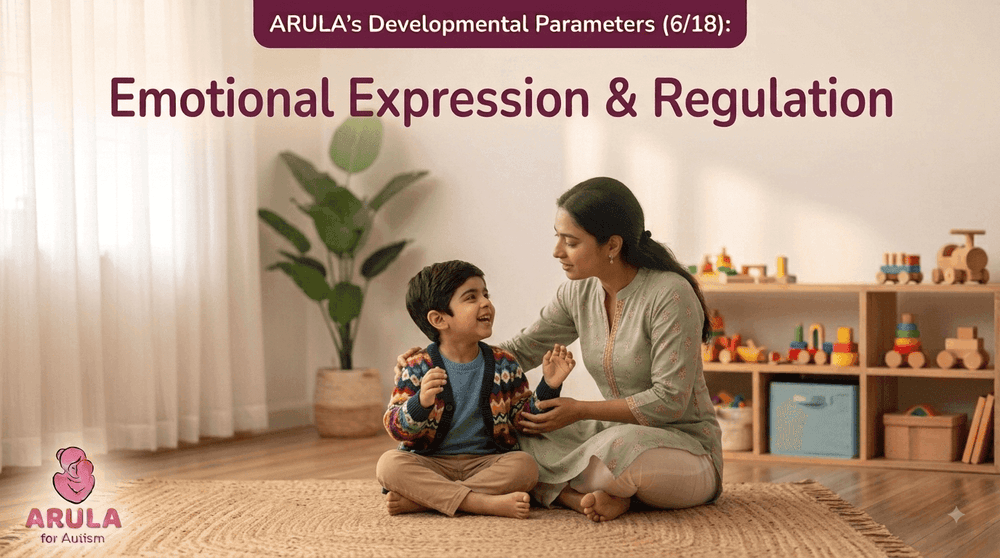
Emotional regulation is a foundational developmental skill that supports communication, learning, and relationships. It develops through safety, co-regulation, and repeated supportive experiences, not through control or compliance. This article explains how emotions develop in the brain, why some children struggle more than others, and how ARULA supports emotional expression and regulation in a gentle, developmentally informed way.
AF
ARULA for Autism
· 6 min read
Why Emotional Regulation Is the Foundation of Learning, Communication, and Relationships
Emotional expression and regulation are central to a child’s development. Before a child can communicate clearly, learn effectively, or engage socially, their nervous system must be able to experience emotions without becoming overwhelmed by them.
In ARULA, emotional regulation is not viewed as emotional control or compliance. It is understood as a developmental capacity that grows through co-regulation, safety, and repeated emotional experiences with trusted caregivers.
This article explains what emotional expression and regulation truly involve, how they develop in the brain, why some children struggle, and how ARULA supports this process gently and effectively.
What Is Emotional Expression & Regulation?
Emotional expression refers to a child’s ability to experience and communicate emotions—through facial expressions, body language, sounds, gestures, or words.
Emotional regulation refers to the ability to manage emotional intensity, recover from distress, and respond to emotional situations without becoming overwhelmed.
These skills do not emerge automatically. They develop gradually through repeated experiences of emotional support.
Basic Emotions in Early Development
How Children Experience Feelings Before They Can Understand or Control Them
Basic emotions are present from very early in life, long before children have the language or cognitive skills to understand what they are feeling. In early development, emotions are experienced primarily in the body, not as thoughts or labels. This is why young children often act out emotions rather than talk about them.
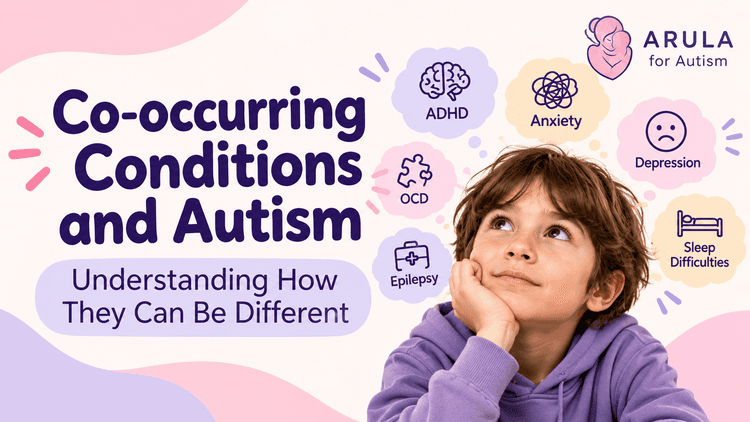
For many children—especially those who are neurodivergent—these emotions can feel intense, sudden, and difficult to manage without adult support.
Fear: The Earliest Protective Emotion
Fear is one of the first emotions to develop. It helps the child respond to unfamiliar or unpredictable situations.
In early development, fear may appear as:
freezing or withdrawal
crying or clinging
avoidance of new people or environments
strong reactions to change
Children with heightened sensory sensitivity may experience fear more frequently because their nervous system perceives the world as unpredictable or overwhelming.
Anger: A Signal of Frustration or Blocked Needs
Anger in young children is rarely about defiance. It usually signals that:
a need is unmet
communication has failed
the child feels powerless or misunderstood
Because children lack the skills to negotiate or explain their feelings, anger is often expressed physically or through meltdowns. Supporting regulation helps anger transform into communication over time.
Happiness: Safety, Connection, and Regulation
Happiness is not just excitement or laughter. In early development, happiness reflects a regulated nervous system.
Signs of happiness include:
relaxed body posture
spontaneous engagement
curiosity and play
eye contact and shared enjoyment
Children learn best in states of calm happiness because the brain is open to connection and learning.
Sadness: Response to Loss or Disconnection
Sadness emerges when something valued is lost—attention, comfort, predictability, or connection.
Young children may show sadness through:
quiet withdrawal
reduced activity
tearfulness
seeking closeness
Sadness is often overlooked in children, especially when it presents as shutdown rather than crying.
Disgust: Protection and Sensory Awareness
Disgust helps protect the child from harmful or overwhelming input. It can be linked to taste, texture, smell, or touch.
In some children, especially those with sensory sensitivities, disgust may appear exaggerated and lead to:
food aversions
resistance to certain textures
avoidance of messy play
This emotion reflects sensory processing differences, not stubbornness.
Surprise: Responding to Change
Surprise occurs when expectations are violated. For young children, frequent surprises can be stressful rather than exciting.
Surprise may lead to:
laughter and curiosity
confusion or distress
emotional escalation if the child is already dysregulated
Predictability helps children manage surprise more effectively.
Why These Emotions Look Bigger in Some Children
Children do not yet have:
mature emotional brakes
language to explain feelings
cognitive tools to reframe experiences
As a result, emotions are experienced fully and immediately. Neurodivergent children may feel emotions more intensely or take longer to recover because their nervous systems process input differently.
What ARULA Observes When Assessing Emotional Regulation
ARULA looks beyond surface behavior to understand the child’s emotional system.
Observations include:
how quickly emotions escalate
how long it takes the child to recover
whether emotions are expressed through behavior or communication
ability to express needs before reaching meltdown
response to caregiver comfort
early signs of empathy or emotional awareness
interpretation of others’ emotional cues
These observations help distinguish emotional immaturity from behavioral challenges.
The Neuropsychological Foundation of Emotional Regulation
Emotional regulation depends on the interaction between two major brain systems.
1. The Limbic System: Emotional Reactivity
The limbic system (including the amygdala) detects emotional significance and threat. It reacts quickly and automatically.
In young or neurodivergent children:
emotional reactions may be intense
fear and frustration may escalate rapidly
emotional responses may override thinking
This system develops early and is highly sensitive to stress.
2. The Prefrontal Cortex: Emotional Regulation
The prefrontal cortex helps:
calm emotional reactions
pause before responding
interpret emotional context
choose appropriate responses
This system develops slowly over many years. Children do not have full access to self-regulation early in life.
This is why children need adults to co-regulate before they can self-regulate.
3. The Connection Between the Two
When the limbic system is activated and the prefrontal cortex is immature, emotions can feel overwhelming. Meltdowns occur not because the child is misbehaving, but because regulation capacity has been exceeded.
Repeated experiences of calm support help strengthen the connection between these systems over time.
Why Some Children Struggle More With Emotional Regulation
Emotional regulation difficulties may be influenced by:
sensory overload
communication challenges
heightened emotional sensitivity
difficulty interpreting emotional cues
inconsistent co-regulation experiences
chronic stress or unpredictability
Importantly, these struggles are not character flaws. They reflect nervous system development.
Why Emotional Regulation Matters for Development
Communication
Children who can regulate emotions are more able to express needs before reaching distress.
Learning
Emotional regulation supports attention, memory, and problem-solving.
Social Relationships
Understanding emotions in self and others supports empathy and connection.
Mental Health
Early regulation skills protect against long-term anxiety and emotional dysregulation.
Common Misconceptions About Emotional Regulation
❌ Children should calm themselves ✔ Regulation develops through co-regulation
❌ Big emotions mean poor parenting ✔ Big emotions often reflect sensitivity
❌ Meltdowns are intentional ✔ They are nervous-system driven
Correcting these misconceptions reduces shame and improves outcomes.
How ARULA Strengthens Emotional Expression & Regulation
A Mother-Led, Developmental Approach
ARULA builds emotional regulation by working with the child’s nervous system rather than trying to control behavior.
1. Co-Regulation Comes First
Children borrow regulation from a calm caregiver. ARULA helps mothers become steady emotional anchors through voice, pacing, and presence.
2. Emotional Expression Is Encouraged, Not Suppressed
Children are allowed to express emotions safely without being corrected for feeling.
Emotions are acknowledged before guidance is offered.
3. Language Is Added Gradually
As regulation improves, ARULA supports naming emotions gently, helping children connect feelings with meaning over time.
4. Predictability Reduces Emotional Overload
Consistent routines and expectations help reduce anxiety and emotional escalation.
5. Regulation Is Strengthened Indirectly
ARULA understands that emotional regulation improves alongside listening, connection, and communication—not through emotional drills.
Signs of Progress Parents Often Notice
Parents often observe:
fewer or shorter meltdowns
quicker emotional recovery
improved ability to express needs
increased empathy and connection
better tolerance of frustration
These changes reflect real nervous system development.
Conclusion: Emotional Regulation Is Learned Through Relationship
Emotional expression and regulation are not skills children are born knowing how to manage. They are learned through repeated experiences of being understood, supported, and guided during emotional moments.
When children feel safe with their emotions, they become capable of managing them. ARULA provides parents with the understanding and tools to support this process gently, respectfully, and effectively—laying the foundation for communication, learning, and emotional wellbeing.