Blog
ARULA’s Developmental Parameters (17/18): Toilet Training
Toilet training is a significant developmental milestone that involves a child’s ability to recognize bodily cues, manage toileting routines, and participate in self-care. It requires coordination of sensory processing, motor skills, emotional regulation, and social understanding.
ARULA for Autism
· 5 min read
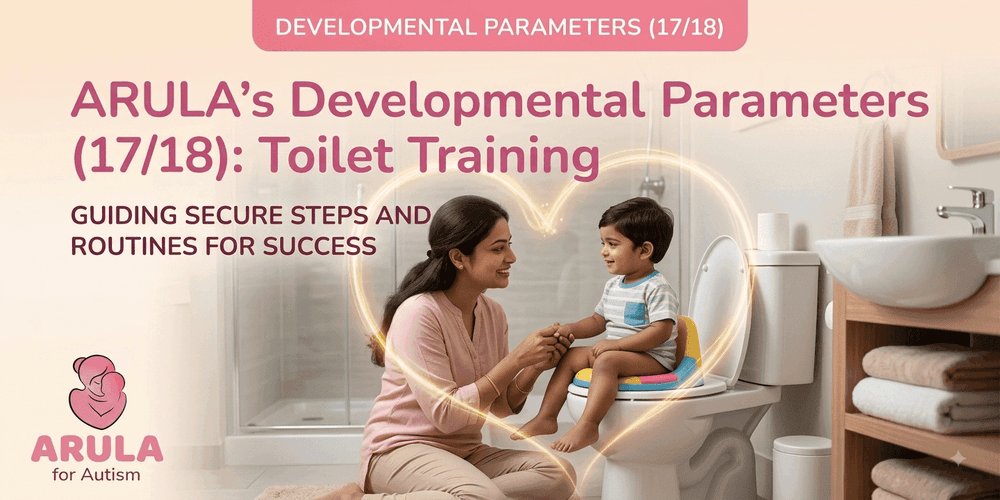
Toilet training refers to a child’s toilet habits and their growing independence in managing bladder and bowel needs.
It is not just about using the toilet. It reflects a child’s development in areas such as body awareness, communication, motor coordination, and routine understanding.
Understanding Toilet Training in Autistic Children
Toilet training is often expected to happen within a certain age range, but for many autistic children, the timeline can look different.
Some children may take longer to recognize internal body signals. Others may find the sensory experience uncomfortable, or may not yet understand the sequence of steps involved.
Because of this, delays in toilet training are not uncommon—and they are not a sign of laziness or refusal. In most cases, the child is not yet developmentally ready in one or more underlying areas.
Instead of focusing only on outcomes (staying dry, using the toilet), it is more helpful to understand what the child is able to do right now, and what support they need to move forward.
What We Observe
When looking at toilet training, it helps to break it down into smaller, observable parts rather than treating it as a single skill.
1. Diaper or Diaper-Free
Some children are fully dependent on diapers, while others may be in transition—using the toilet at certain times but still relying on diapers in other situations.
Being diaper-free is not the starting point; it is the result of readiness across multiple areas. Many children move gradually between these stages.
2. Ability to Indicate
Before a child can use the toilet independently, they need to recognize and communicate the need.