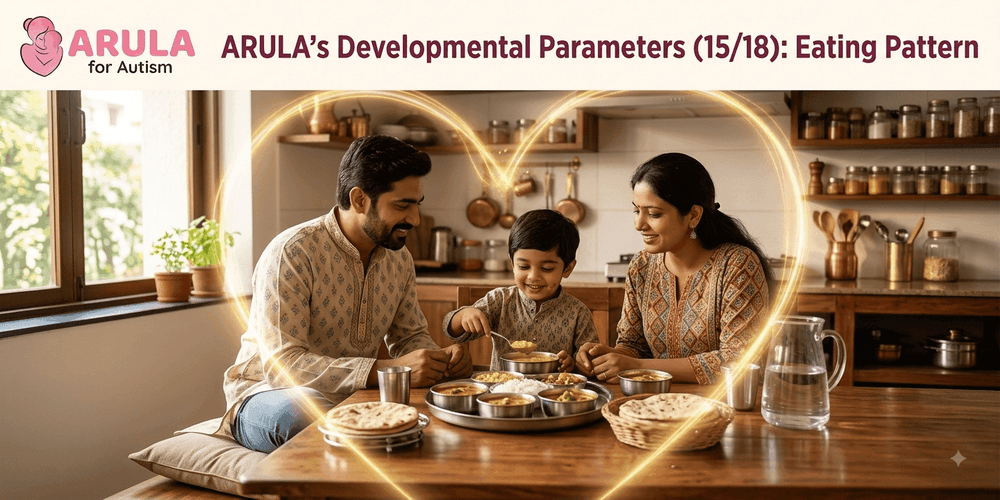
Eating pattern refers to the quality, quantity, diversity, and functional aspects of a child’s food intake. It encompasses not only what a child eats, but also how, when, and under what conditions eating occurs.
AF
ARULA for Autism
· 5 min read
Understanding Eating as a Foundation of Regulation, Growth, and Participation
Eating pattern refers to the quality, quantity, diversity, and functional aspects of a child’s food intake. It encompasses not only what a child eats, but also how, when, and under what conditions eating occurs.
In developmental terms, eating is a multidimensional process involving:
sensory processing
motor coordination (oral and fine motor skills)
emotional regulation
behavioral flexibility
social participation
Within the ARULA framework, eating is viewed as a core regulatory and functional parameter, because feeding challenges often reflect broader difficulties in sensory integration, self-regulation, and adaptive functioning.
Eating is not just about nutrition—it is about a child’s ability to engage with their environment in a regulated, flexible, and meaningful way.
What ARULA Observes in Eating Patterns
ARULA evaluates eating holistically, focusing on both observable behaviors and underlying mechanisms.
Delayed self-feeding may indicate motor coordination difficulties, low confidence, or over-reliance on caregiver support.
2. Oral Sensory Processing
Sensitivity to textures, temperatures, and tastes
Gagging, refusal, or distress with certain foods
Preference for specific sensory qualities (e.g., crunchy, smooth)
Oral sensory aversions are common in children with sensory processing differences and may manifest as:
avoidance of mixed textures
refusal of new foods
strong reactions to smells or flavors
These responses are often neurological rather than behavioral, and require a regulatory approach rather than forceful feeding.
3. Food Selectivity (Picky Eating)
Limited range of accepted foods
Strong preference for specific brands, colors, or presentations
Resistance to trying new foods
Selective eating may arise from:
sensory sensitivities
need for predictability
anxiety or rigidity
In some children, food selectivity can significantly limit nutritional diversity and social participation.
4. Ability to Sit and Participate in Meals
Ability to remain seated during meals
Attention and engagement with eating
Tolerance for structured mealtime routines
Difficulty sitting for meals may reflect:
hyperactivity or restlessness
low sustained attention
dysregulation or sensory seeking
Mealtime participation is an important indicator of behavioral regulation and environmental adaptability.
5. Quantity and Nutritional Adequacy
Amount of food consumed
Balance across food groups
Consistency in appetite
Both under-eating and over-eating may signal regulatory challenges, including:
poor hunger–satiety awareness
emotional eating patterns
inconsistent routines
6. Mealtime Behavior and Emotional Responses
Tantrums, refusal, or distress during meals
Dependence on distraction (screens, toys)
Interaction with caregivers during feeding
Eating is closely tied to emotional experiences and relational dynamics. Negative mealtime experiences can reinforce avoidance and resistance.
Why Eating Patterns Are Important
1. Physical Growth and Nutrition
Adequate and balanced nutrition supports:
brain development
physical growth
immune functioning
Restricted diets or poor intake can lead to nutritional deficiencies and delayed growth.
2. Sensory Integration
Eating is one of the most complex sensory experiences, involving:
taste (gustatory)
smell (olfactory)
texture (tactile)
movement (oral proprioception)
Difficulties in eating often reflect underlying sensory processing challenges, particularly in neurodivergent children.
3. Emotional Regulation
Food and eating are closely linked to emotional states. Dysregulated children may:
refuse food
overeat
depend on comfort feeding
Developing healthy eating patterns supports self-regulation and emotional stability.
4. Motor Development
Eating requires coordinated use of:
oral muscles (chewing, swallowing)
fine motor skills (grasping utensils)
postural control (sitting upright)
Delays in these areas can impact independence and efficiency in feeding.
5. Social Participation
Meals are inherently social experiences. Eating patterns influence:
participation in family meals
school routines (snack/lunch time)
peer interactions
Children with feeding difficulties may experience social exclusion or stress in group settings.
Common Eating Challenges in Children
Children may present with:
extreme picky eating
refusal of entire food groups
dependence on liquids or specific textures
gagging or vomiting with certain foods
inability to sit through meals
reliance on distraction for feeding
In neurodivergent children, these challenges are often linked to:
sensory sensitivities
rigidity and need for sameness
anxiety around new experiences
differences in interoceptive awareness (hunger/fullness cues)
How ARULA Supports Healthy Eating Patterns
ARULA emphasizes a regulation-first, child-centered approach, rather than forceful or compliance-based feeding strategies.
1. Creating Structured and Predictable Mealtimes
Consistency helps the child feel secure and prepared.
This includes:
fixed meal and snack timings
designated eating spaces
clear beginning and end to meals
Predictability reduces anxiety and improves participation.
2. Supporting Sensory Exploration Gradually
Children are encouraged to:
interact with food without pressure to eat
explore textures, smells, and appearances
build tolerance step-by-step
This reduces sensory defensiveness and promotes flexibility over time.
3. Encouraging Self-Feeding and Independence
ARULA supports:
gradual development of utensil use
hand-to-mouth coordination
autonomy in eating
Independence enhances confidence and intrinsic motivation.
4. Reducing Mealtime Pressure
Forceful feeding or coercion can:
increase anxiety
reinforce avoidance
damage the child’s relationship with food
ARULA promotes a low-pressure, supportive environment.
5. Addressing Emotional and Relational Aspects
Positive caregiver–child interactions during meals are essential.
Strategies include:
responsive feeding
calm and neutral responses to refusal
reinforcing small successes
6. Integrating Daytime Regulation
Eating improves when the child is regulated overall.
ARULA emphasizes:
balanced activity levels
emotional stability
sensory regulation throughout the day
Conclusion
Eating is a complex developmental function that integrates sensory processing, motor skills, emotional regulation, and social participation. Challenges in eating patterns are often not isolated issues, but reflections of broader regulatory differences.
Within the ARULA framework, eating is approached with sensitivity, structure, and respect for the child’s developmental readiness. Rather than focusing solely on food intake, the emphasis is on building:
comfort with eating
flexibility in food experiences
independence and participation
When eating patterns improve, children often show parallel gains in regulation, confidence, and social engagement.