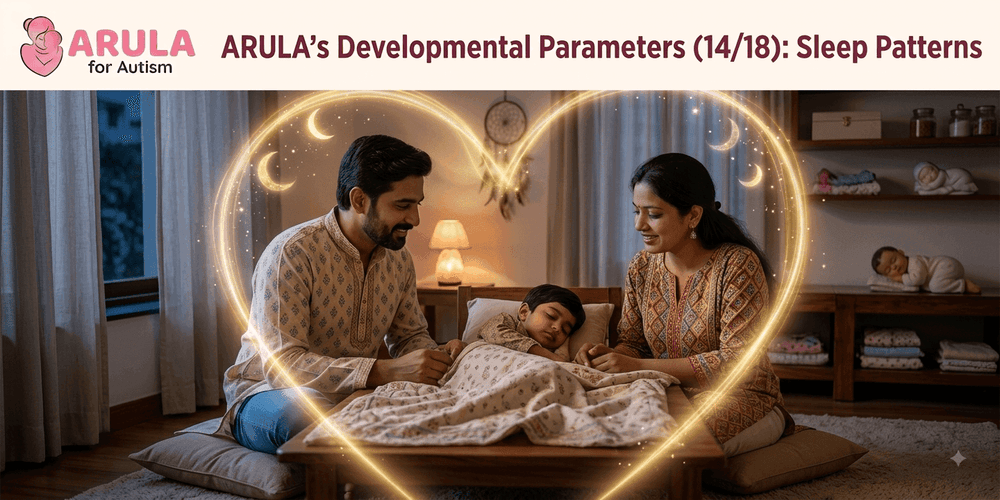
Sleep pattern refers to the quality, duration, timing, and consistency of a child’s sleep. It includes how easily a child falls asleep (sleep onset), the continuity of sleep through the night, total sleep duration, and how restorative the sleep experience is.
AF
ARULA for Autism
· 4 min read
Understanding Sleep as the Foundation of Regulation, Learning, and Development
Sleep pattern refers to the quality, duration, timing, and consistency of a child’s sleep. It includes how easily a child falls asleep (sleep onset), the continuity of sleep through the night, total sleep duration, and how restorative the sleep experience is.
Sleep is not merely a passive state of rest—it is a dynamic neurobiological process essential for brain organization and regulation. During sleep, critical processes such as synaptic pruning, memory consolidation, hormonal regulation, and emotional processing take place (Diekelmann & Born, 2010).
Within the ARULA framework, sleep is conceptualized as a core regulatory parameter, because disturbances in sleep rarely occur in isolation. Instead, they often cascade into challenges in attention, behavior, emotional regulation, sensory processing, and learning (Turnbull et al., 2013).
What ARULA Observes in Sleep Patterns
ARULA adopts a holistic and functional perspective, focusing not only on observable sleep behaviors but also on the underlying regulatory mechanisms influencing them.
Sleep is a foundational pillar of child development, influencing emotional regulation, attention, learning, behavior, sensory processing, and physical growth.
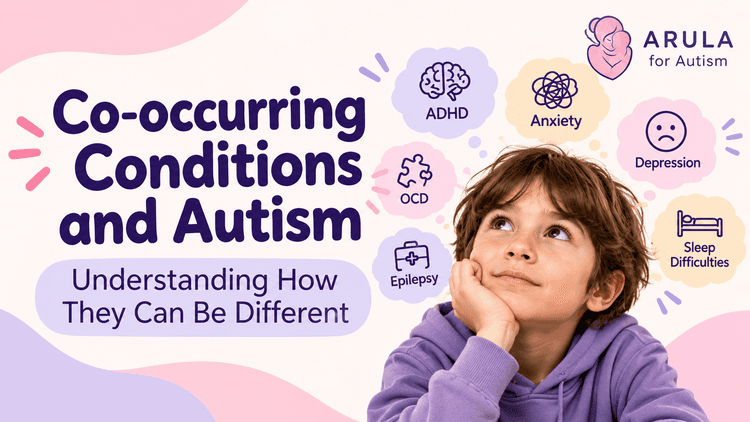
Within the ARULA framework, sleep is understood as part of a broader regulatory system, where disruptions often reflect deeper challenges in nervous system functioning. By addressing sleep through predictability, emotional safety, and sensory regulation, children can develop healthier and more restorative sleep patterns.
Improving sleep often leads to widespread developmental gains, making it a critical focus for both assessment and intervention.