ARULA’s Developmental Parameters (11/18): Social Skills
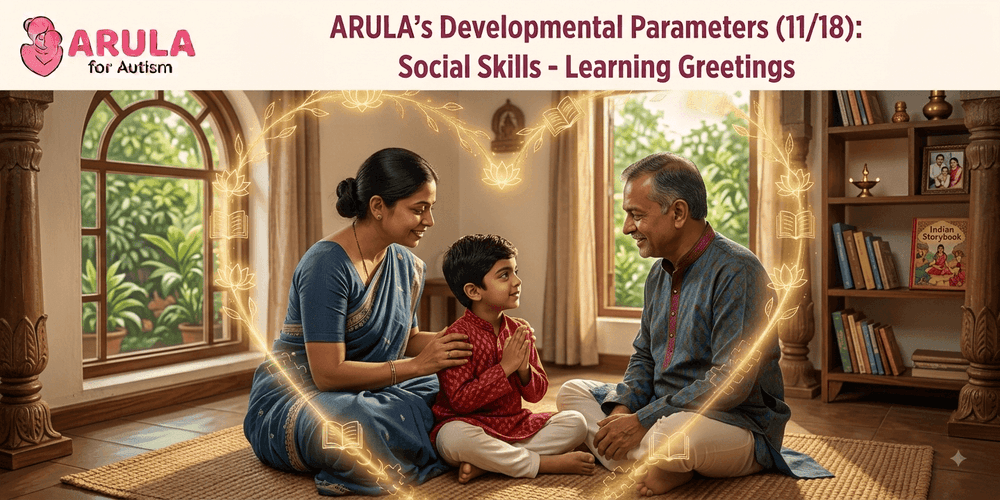
Social skills are a critical developmental parameter that ARULA closely monitors. They refer to a child’s ability to engage in age-appropriate interactions with both familiar and unfamiliar people. These skills include not only speaking or playing with others, but also understanding social cues, taking turns, sharing emotional experiences, and responding appropriately within relationships.
AF
ARULA for Autism
· 5 min read
Building the Foundations for Relationships, Independence, and Long-Term Success
Social skills refer to a child’s ability to engage in age-appropriate interactions with both familiar and unfamiliar people. These skills include not only speaking or playing with others, but also understanding social cues, taking turns, sharing emotional experiences, and responding appropriately within relationships.
Social development is not a single skill—it is a network of abilities that depend on emotional regulation, communication, cognitive flexibility, and motivation to connect. In ARULA, social skills are viewed as a developmental outcome rooted in safety, regulation, and relational experience, not simply as behaviors to be trained.
What Are Social Skills?
Social skills include:
Social reciprocity (back-and-forth interaction)
Parallel play (playing beside peers)
Cooperative play (playing with shared goals)
Imitation skills
Understanding facial expressions and tone
Perspective-taking and empathy (age-dependent)
These skills evolve gradually across early childhood and continue refining into adolescence.
ARULA evaluates social skills by observing patterns across settings and relationships rather than relying on single incidents.
1. Social Reciprocity
Social reciprocity refers to the natural back-and-forth exchange that occurs during interaction. It includes:
responding when spoken to
maintaining engagement
sharing enjoyment
initiating interaction
turn-taking in play or conversation
Reciprocity reflects integration between emotional and cognitive systems. Research shows that early reciprocal engagement predicts later communication and adaptive outcomes (Mundy & Newell, 2007).
Children who struggle with reciprocity may:
talk without noticing listener response
withdraw from interaction
prefer predictable routines over social unpredictability
These patterns often reflect regulation or processing differences rather than unwillingness.
2. Parallel and Cooperative Play
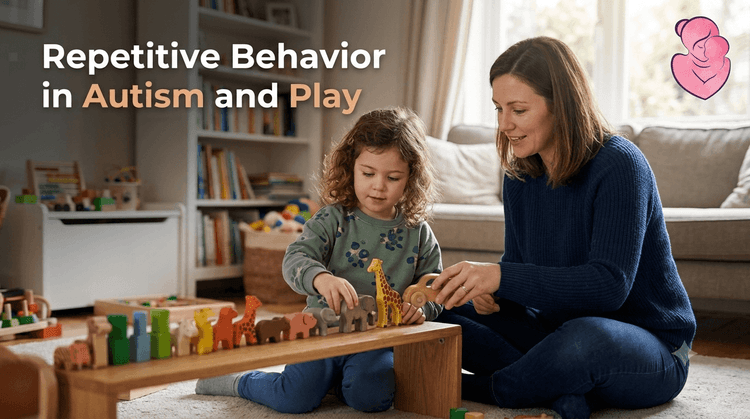
Play evolves in stages:
Solitary play – independent engagement
Parallel play – playing alongside peers
Associative play – loose interaction
Cooperative play – shared goals and roles
Parallel play is developmentally appropriate in toddlers and early preschoolers. Cooperative play emerges later as executive function and perspective-taking strengthen (Parten, 1932; Howes, 1980).
ARULA observes:
whether the child tolerates proximity to peers
whether they imitate peer actions
whether shared play themes emerge
whether conflict is managed adaptively
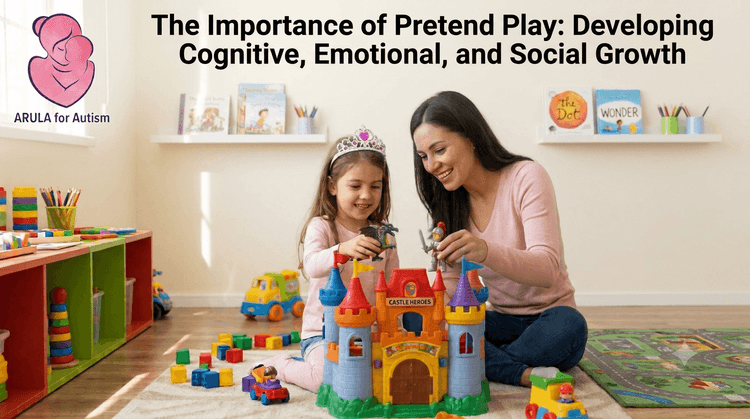
Play is not trivial—it is the primary laboratory for social learning.
3. Imitation Skills
Imitation is a cornerstone of social learning. It supports:
language acquisition
emotional expression
motor development
peer bonding
Children often imitate gestures, sounds, or play actions before developing spontaneous social interaction. Imitation reflects mirror neuron system engagement and social attention mechanisms (Rizzolatti & Craighero, 2004).
Reduced imitation may signal:
attention differences
social motivation differences
motor planning challenges
4. Understanding Social Cues
Social communication relies heavily on interpreting:
facial expressions
tone of voice
body language
contextual cues
Children must learn that raised eyebrows may signal surprise, a softer tone may indicate sadness, and peer withdrawal may signal disinterest.
Difficulties interpreting cues can lead to misunderstandings, social withdrawal, or rigid interaction patterns (Adolphs, 2001).
Neurodevelopmental Foundations of Social Skills
Social skills emerge from the integration of multiple brain systems.
1. Social Brain Networks
Regions such as:
the superior temporal sulcus
amygdala
medial prefrontal cortex
support interpretation of facial expressions, gaze direction, and social meaning (Adolphs, 2001).
2. Executive Function
Executive function supports:
impulse control
perspective-taking
flexible thinking
rule-following
Immature executive systems may result in difficulty with sharing, turn-taking, or adjusting behavior in group settings.
3. Emotional Regulation Systems
Children who struggle to regulate emotions may withdraw or become overwhelmed in social situations. Emotional safety is foundational to social exploration.
4. Reward Pathways
Social engagement is reinforced when interaction feels rewarding. Research suggests that differences in social reward processing may influence engagement patterns (Chevallier et al., 2012).
Why Social Skills Matter
Social skills predict long-term outcomes in:
academic achievement
employment
independent living
mental health
peer relationships
Longitudinal research shows early social competence is associated with improved adult functioning (Jones et al., 2015).
Social skills are not simply about being “friendly”—they influence adaptability across life domains.
Common Misconceptions
“My child prefers playing alone, so they don’t need social skills.” Preference does not eliminate developmental need for social understanding.
“Social skills training is about forcing interaction.” True development occurs through safe, meaningful engagement.
“If a child can talk well, social skills are fine.” Verbal fluency does not guarantee social reciprocity.
How ARULA Supports Social Skills Development
ARULA approaches social skills development holistically rather than behaviorally.
1. Strengthening Emotional Safety
Children engage socially when they feel regulated. ARULA prioritizes:
reducing performance pressure
increasing predictability
improving co-regulation
A regulated child is more socially available.
2. Enhancing Mother–Child Reciprocity
The first social relationship shapes all others. ARULA strengthens:
turn-taking interactions
shared attention moments
emotional mirroring
When reciprocity becomes natural within the parent-child relationship, peer reciprocity becomes more accessible.
3. Encouraging Play Without Forcing Interaction
ARULA supports gradual progression:
tolerating peer proximity
parallel play
guided shared activities
cooperative themes
Children are not rushed beyond their developmental stage.
4. Supporting Imitation Through Modeling
Parents are guided to:
model simple actions
celebrate imitation attempts
imitate the child to increase engagement
Reciprocal imitation builds connection.
5. Teaching Social Cue Awareness Naturally
Rather than drilling social rules, ARULA integrates:
emotional labeling
facial expression awareness
tone variation
contextual explanation
This strengthens intuitive understanding.
6. Building Social Confidence
ARULA avoids shaming or overcorrecting social missteps. Confidence grows when children feel accepted and supported.
Conclusion
Social skills are foundational to independence and long-term success. They develop gradually through safe, reciprocal relationships and emotionally regulated interaction.
When social challenges are present, they often reflect differences in regulation, processing, or motivation—not lack of desire to connect. By strengthening emotional safety, reciprocal engagement, and play-based learning, ARULA supports social competence in a developmentally respectful way.
Social development is not about compliance. It is about connection.