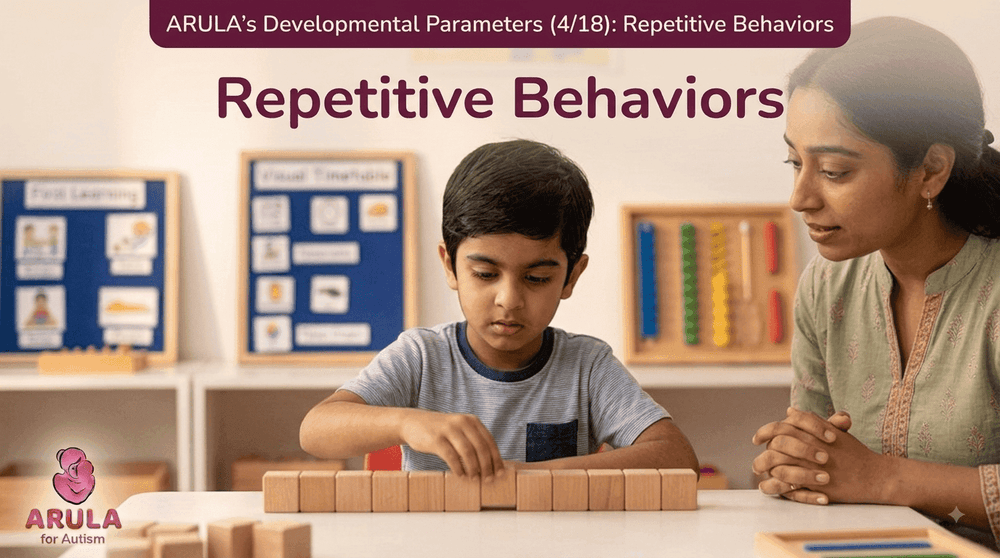
Within ARULA, repetitive behaviors are understood not as habits to eliminate, but as communication strategies the child uses when words, regulation, or emotional support are not yet accessible. This article explains what repetitive behaviors are, why they occur, what they tell us about a child’s internal state, and how ARULA works with them developmentally.
AF
ARULA for Autism
· 8 min read
Understanding Why Repetition Is Regulation, Not “Problem Behavior”
Repetitive behaviors are one of the most visible and misunderstood aspects of autism and other neurodevelopmental differences. Often labelled as “self-stimulatory,” “non-functional,” or something that needs to be reduced, these behaviors are actually meaningful signals from the child’s nervous system.
Within ARULA, repetitive behaviors are understood not as habits to eliminate, but as communication strategies the child uses when words, regulation, or emotional support are not yet accessible.
This article explains what repetitive behaviors are, why they occur, what they tell us about a child’s internal state, and how ARULA works with them developmentally.
What Are Repetitive Behaviors?
Repetitive behaviors refer to repeated movements, actions, or patterns of engagement that a child returns to frequently. These behaviors often involve rhythm, predictability, or sensory feedback.
Common examples include:
hand flapping, rocking, spinning
pacing or repetitive jumping
fixation on textures, patterns, lights, or sounds
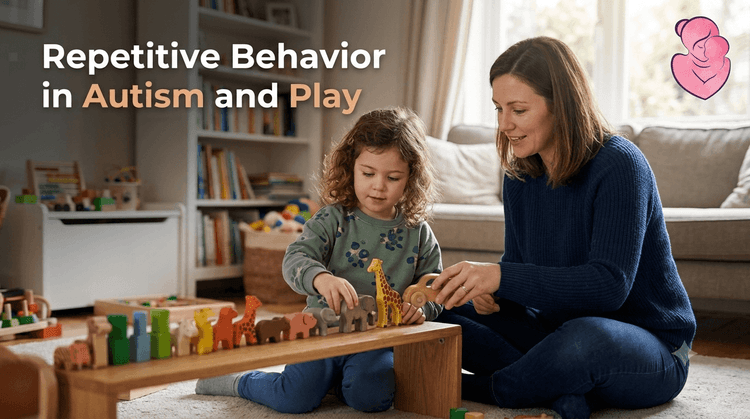
lining up toys or repeating the same play sequence
repetitive use of objects (opening/closing, spinning wheels)
While these behaviors may look unusual to observers, for the child they often serve a clear internal purpose.
Repetitive behaviors usually emerge when a child’s nervous system is trying to restore balance.
They can indicate:
sensory overload or sensory seeking
emotional stress or anxiety
difficulty processing the environment
unmet communication needs
lack of regulation or predictability
Rather than asking “How do we stop this?”, ARULA asks: “What is the child regulating through this behavior?”
Repetitive Behaviors as a Form of Self-Regulation
Many repetitive movements provide strong sensory input to the body. This input can help the child:
feel calmer
stay alert
reduce internal chaos
block out overwhelming stimuli
Research in sensory neuroscience shows that repetitive, rhythmic movement can help stabilize the nervous system, especially when other regulatory supports are missing (Marco et al., 2011).
In this sense, repetitive behaviors are not signs of dysfunction — they are adaptive responses to an overstimulating or unpredictable world.
Fixations and Repetitive Play: Predictability Brings Safety
Children often return to the same object, texture, or activity because it feels predictable and controllable.
Fixations may:
reduce anxiety
create a sense of order
allow the brain to process information deeply
serve as a safe anchor in overwhelming environments
When novelty feels threatening, repetition provides safety. Over time, with emotional support and regulation, flexibility increases naturally.
What ARULA Observes When Assessing Repetitive Behaviors
ARULA does not measure repetitive behaviors by frequency alone. Instead, it looks at context and function, including:
When the behavior appears (stress, boredom, excitement, fatigue)
Whether it increases during overload or decreases with regulation
How the child responds if interrupted
Whether the behavior replaces communication
Whether the child can return to interaction afterward
This functional understanding prevents misinterpretation and avoids unnecessary suppression.
The Neuropsychological Foundation of Repetitive Behaviors
Why the Brain Repeats What Helps It Cope
Repetitive behaviors are not random or purposeless actions. They are supported by specific brain systems that help the child maintain internal stability when the environment or emotional state becomes overwhelming.
Several neural systems contribute to the emergence of repetitive behaviors:
Sensory Processing Networks
Some children experience sensory input more intensely or less predictably than others. Repetitive movements such as rocking, spinning, or hand flapping provide consistent sensory feedback that helps the brain organise incoming information. This predictable input can be calming and grounding when external stimuli feel chaotic.
Basal Ganglia and Motor Patterning
The basal ganglia play a role in initiating and repeating movement patterns. Differences in this system can make repetitive actions feel stabilising and easier to access than varied or novel movements, especially during stress.
Autonomic Nervous System
When the nervous system is overstimulated, repetitive behaviors can help bring the body back toward equilibrium. They function as self-generated calming mechanisms, especially when external co-regulation is not yet available.
Communication and Emotional Processing Systems
When language or emotional expression is limited, the body often communicates through action. Repetitive behaviors can increase during frustration, unmet needs, or emotional overload, acting as a non-verbal expression of internal states.
Understanding these systems helps shift the interpretation of repetitive behaviors from “problematic” to protective and regulatory.
Why Repetitive Behaviors Matter for Development
Repetitive behaviors provide valuable information about a child’s internal experience and developmental needs.
Indicators of Regulation
An increase in repetitive behaviors often signals rising stress or sensory overload. A decrease usually reflects improved regulation and emotional safety.
Markers of Readiness
As children become more regulated and communicative, repetitive behaviors often soften naturally, indicating readiness for increased flexibility and engagement.
Guides for Adult Response
These behaviors guide caregivers toward understanding when a child needs support, predictability, or reduced demands rather than correction.
Ignoring or suppressing repetitive behaviors without addressing their underlying function can increase anxiety and reduce trust.
Common Misunderstandings That Interfere With Progress
Repetitive behaviors are frequently misinterpreted in ways that undermine development.
They are often seen as:
habits that must be broken
distractions from learning
attention-seeking actions
In reality, they are usually:
nervous-system driven
self-regulatory
responses to unmet sensory or emotional needs
Attempts to eliminate these behaviors through redirection or discipline can remove the child’s primary coping strategy without providing an alternative.
How ARULA Works With Repetitive Behaviors
A Calm, Developmental Approach for Parents
Many parents feel anxious when they notice repetitive behaviors in their child. There is often fear that these behaviors will worsen, interfere with learning, or need to be stopped quickly. ARULA takes a very different approach — one that is grounded in neuroscience and emotional development rather than fear or urgency.
ARULA does not treat repetitive behaviors as something that must be removed. Instead, it understands them as signs that the child is trying to cope.
1. ARULA First Helps Parents Understand Why the Behavior Is Happening
The first step is helping parents see that repetitive behaviors are not random or meaningless. They usually appear when a child:
feels overwhelmed
is trying to calm their body
cannot communicate a need clearly
is overstimulated or emotionally overloaded
Through guided observation, ARULA helps parents notice patterns:
When does the behavior increase?
What was happening just before it started?
Does it happen during stress, excitement, or fatigue?
This understanding alone often reduces parental anxiety, because the behavior starts to make sense.
2. Regulation Comes Before Any Attempt at Change
ARULA does not try to change repetitive behaviors while the child is dysregulated. When a child is overwhelmed, removing their coping strategy can increase distress.
Instead, ARULA supports parents in helping the child feel:
emotionally safe
sensory-regulated
predictable and supported
As regulation improves, the nervous system no longer needs to rely as heavily on repetitive actions.
3. The Behavior Is Not Stopped — the Stress Is
Rather than stopping the behavior itself, ARULA focuses on reducing the stress that makes the behavior necessary.
This may involve:
slowing down interactions
reducing verbal demands
creating predictable routines
using a calm, steady voice
allowing safe movement
When stress decreases, repetitive behaviors often soften naturally without being targeted directly.
4. Parents Are Taught What Not to Do (This Matters)
ARULA gently guides parents away from strategies that unintentionally increase anxiety, such as:
repeatedly telling the child to stop
physically blocking the behavior
distracting abruptly without regulation
reacting with fear or urgency
These responses can make the child feel unsafe and increase the need for repetition.
Instead, parents are taught to stay neutral, present, and emotionally available.
5. The Mother’s Role as a Regulating Presence
ARULA places strong emphasis on the mother’s voice, pacing, and emotional presence. A calm caregiver nervous system helps regulate the child’s nervous system.
Parents are guided to:
speak slowly and predictably
narrate rather than command
acknowledge the child’s state without judgment
stay connected even when the child is repetitive
This co-regulation often leads to reduced intensity of behaviors over time.
6. Communication Slowly Replaces Repetition
As emotional safety and listening improve, many children begin to:
seek interaction more
use gestures, sounds, or words
show their needs earlier
rely less on repetitive behaviors
ARULA does not rush this process. Communication replaces repetition when the child is ready, not when adults demand it.
7. What Parents Often Notice Over Time
With consistent ARULA support, parents often report:
less frequent or less intense repetitive behaviors
quicker calming after stress
more flexibility during transitions
increased engagement and eye contact
greater emotional connection
These changes happen gradually and are signs of genuine developmental progress.
8. The Reassuring Truth for Parents
One of the most important things ARULA teaches parents is this:
Repetitive behaviors are not something you caused, and they are not something you need to panic about.
When children feel understood and supported, their nervous systems mature. As that happens, the need for repetitive behaviors naturally reduces.
ARULA helps parents move from fear and correction to understanding and confidence — and that shift alone often creates meaningful change.
Conclusion
Repetitive behaviors are not meaningless actions or habits that need to be removed. They are signals—ways a child’s nervous system communicates stress, sensory overload, emotional needs, or difficulty expressing itself. When viewed through a developmental and neuropsychological lens, these behaviors become sources of information rather than causes for alarm.
Throughout this article, we have seen that repetitive movements, fixations, and patterns often serve a regulatory purpose. They help children feel safe, organised, and emotionally balanced when the world feels overwhelming. Attempts to suppress these behaviors without understanding their function can increase distress and disconnect. Support, not control, leads to real change.
ARULA’s approach is grounded in this understanding. By prioritising regulation, emotional safety, listening, and co-regulation, ARULA helps reduce the need for repetitive behaviors rather than targeting the behaviors themselves. As children feel calmer and more understood, repetition often softens naturally, making space for communication, flexibility, and engagement to grow.
For parents, this shift—from fear to understanding—can be deeply relieving. It allows you to respond with confidence instead of worry, and with connection instead of correction.