
Article
Case Study 8: Improvements in Functional Communication, Attention, and Social Participation
Case Background
A.A. is a 10-year-1-month-old child diagnosed with Autism Spectrum Disorder (ASD) with co-occurring Attention-Deficit/Hyperactivity Disorder (ADHD). He attends a special school and lives with his parents, who play an active role in his developmental journey. While A.A. had age-appropriate adaptive skills and good academic potential, his family sought the ARULA Holistic Speech & 18-Parameter Developmental Program to improve his communication, attention, emotional regulation, and social interaction through a structured, home-based, parent-led approach.
Before Therapy: Presenting Concerns and Initial Challenges
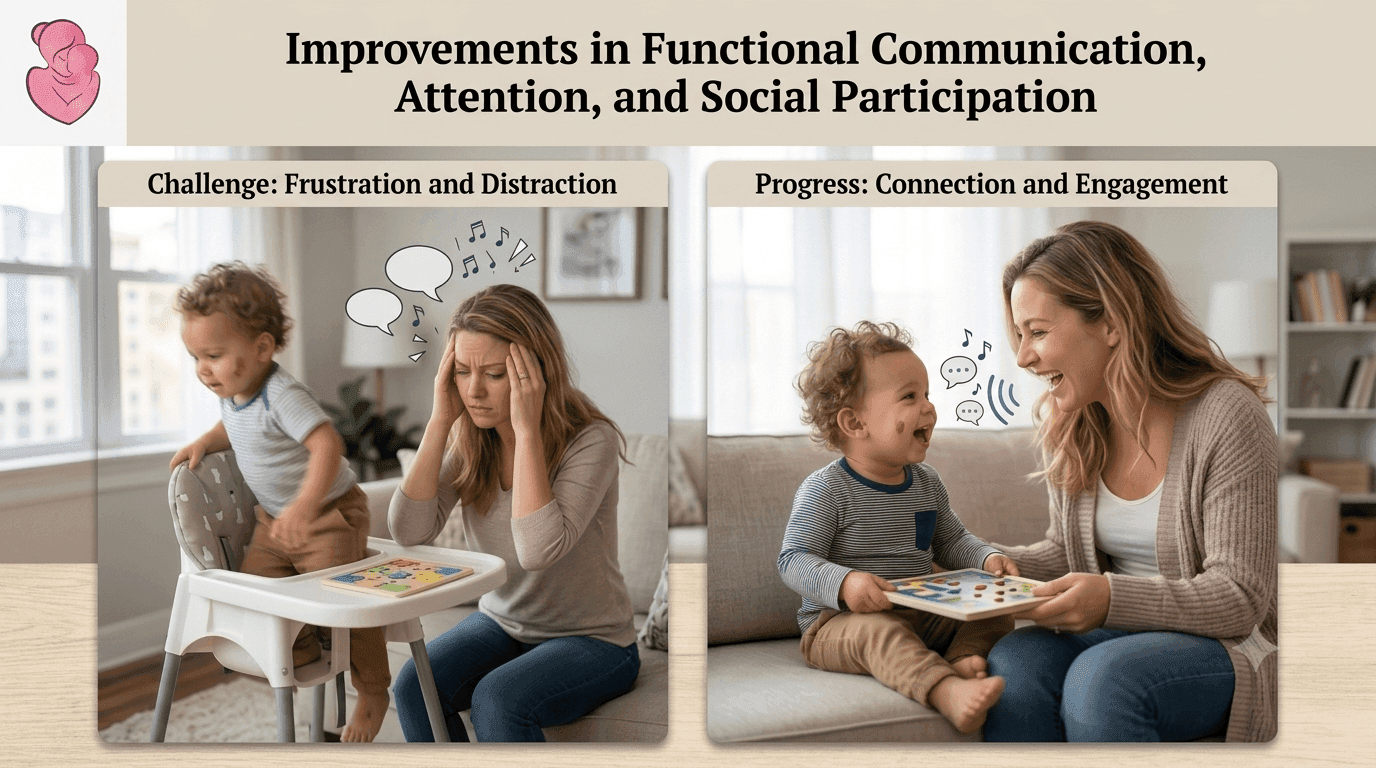
At the time of assessment, A.A. demonstrated challenges in communication, behaviour, and social engagement despite strengths in memory, self-help skills, and family bonding.
Communication and Language
- Limited expressive language, communicating mainly through short, need-based phrases.
- Unclear speech articulation affecting functional communication.
- Difficulty understanding and following verbal instructions without repeated prompts.
Social Communication and Emotional Development
- Inconsistent eye contact and reduced peer interaction.
- Limited social reciprocity and difficulty expressing emotions appropriately.
- Reduced engagement in conversations and unfamiliar social situations.
Attention, Behaviour, and Sensory Regulation
- Hyperactivity, reduced sitting tolerance, and attention that depended largely on personal interests.
- Verbal stimming, obsessive interests, and occasional emotional outbursts.
- Sensory sensitivities to clothing textures and challenges with self-regulation.
Despite these challenges, A.A. demonstrated strong adaptive functioning, good memory, independence in daily living activities, and a supportive family environment that provided an excellent foundation for intervention.
During Therapy: ARULA's Individualized Intervention Approach
The ARULA intervention focused on improving listening, functional communication, self-regulation, and social participation by integrating therapeutic strategies into everyday routines. Parents were coached to use parallel talking, language modelling, structured routines, sensory regulation strategies, joint attention activities, visual supports, and play-based learning to encourage communication within natural environments.
Intervention also emphasized improving speech clarity, receptive language, emotional regulation, sitting tolerance, and peer interaction while reducing verbal stimming and sensory-related challenges. Regular parent coaching and routine-based practice ensured that developmental skills were generalized beyond therapy sessions into home, school, and community settings.
After Therapy: Clinical Progress
Following consistent implementation of the ARULA Approach, A.A. demonstrated meaningful improvements in communication readiness, attention, and emotional regulation. Increased eye contact, improved understanding of instructions, better participation during structured activities, and greater social engagement were observed. The child became more responsive during interactions, showed improved self-regulation, and demonstrated increased confidence while participating in daily routines.
Although expressive language, conversational skills, and flexible social communication remain ongoing goals, A.A.'s existing strengths in adaptive functioning, memory, and family support have enabled steady developmental progress across multiple domains.
Conclusion
A.A.'s journey highlights the importance of individualized, parent-mediated intervention for children with Autism Spectrum Disorder and ADHD. By focusing on foundational communication skills, sensory regulation, and meaningful parent-child interactions, the ARULA Approach has supported improvements in functional communication, attention, and social participation. Continued intervention will focus on expanding expressive language, strengthening emotional regulation, and promoting greater independence across home, school, and community environments.
Disclaimer
The case studies presented in this article are based on real clinical cases. To protect client confidentiality and privacy, all identifying information, including names and personal details, has been modified or anonymized. Any resemblance to actual individuals is purely coincidental. These case studies are shared solely for educational, professional, and informational purposes, with a focus on developmental profiles, intervention approaches, and observed outcomes rather than individual identity.