
Article
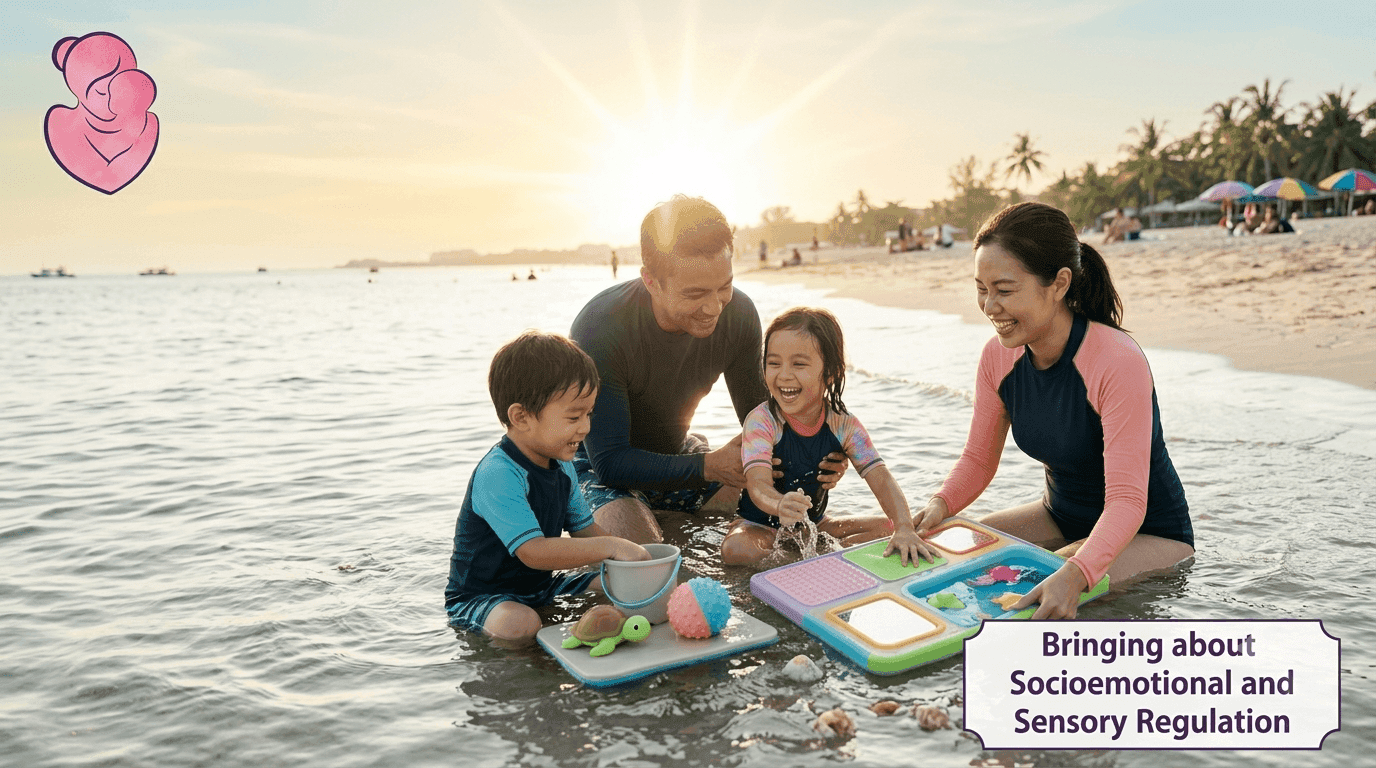
Case Study 2: Bringing about Socioemotional and Sensory Regulation
Case Background
Child B is a young child presenting with developmental delays primarily affecting communication, social interaction, and sensory processing. From an early age, her family observed that she was slower to achieve developmental milestones compared to her peers. She began speaking later than expected and continues to communicate mainly through sounds, gestures, and pointing rather than meaningful words.
Despite these challenges, Child B demonstrates several strengths that support her developmental potential. She enjoys engaging in water play, music, and swinging activities, has good memory skills, and shows emerging problem-solving abilities. Recognizing the need for a structured, parent-led intervention, the family enrolled in the ARULA Holistic Speech & 18-Parameter Developmental Program to build foundational communication, listening, and social skills within everyday routines.
Before Therapy: Presenting Concerns and Initial Challenges
At the time of assessment, Child B demonstrated delays across multiple developmental domains that affected her communication, learning readiness, and social participation.
Communication and Language
- Limited expressive language, communicating primarily through vocalizations and pointing.
- Delayed listening and receptive language skills.
- Difficulty understanding spoken instructions and expressing needs verbally.
Social Communication and Emotional Development
- Reduced eye contact and limited sitting tolerance during interactions.
- Preferred solitary play unless guided by an adult.
- Emerging emotional expression but limited social communication with peers.
Attention, Behaviour, and Sensory Regulation
- Difficulty remaining seated and attending to structured activities.
- Sensory-seeking behaviours including corner eye gazing, repetitive vocalizations, and lining up toys.
- Sensitivity to food textures, with a tendency to gulp food rather than chew.
Adaptive and Cognitive Strengths
Although communication was significantly delayed, Child B demonstrated good memory, curiosity, and emerging problem-solving abilities, indicating strong learning potential when provided with appropriate support.
During Therapy: ARULA's Individualized Intervention Approach
The intervention focused on strengthening listening skills, receptive language, social engagement, and sensory regulation through parent-led strategies integrated into daily life. Parents were coached to use parallel talking, narration, bedtime storytelling, sensory schedules, pointing cues, pretend play, and structured outdoor experiences to increase communication opportunities naturally throughout the day.
Over seven Monthly Assessment Reviews (MARs), intervention goals were continuously adapted based on Child B's progress. Activities such as beach outings, picture-to-story conversations, object narration, Dynamic, Brilliance, and Excellence programs, deep compression, and generalization of learned skills were incorporated to improve listening, understanding, attention, and social participation while supporting sensory regulation.
After Therapy: Clinical Progress
Over the course of intervention, Child B demonstrated consistent improvements across several developmental areas. Listening and receptive understanding improved steadily, followed by noticeable gains in eye contact, emotional expression, sitting tolerance, curiosity, and pretend play. She became more interested in interacting with people and exploring her surroundings, while also showing increased use of pointing and expressive cues to communicate. Vocalizations became more frequent, and overall engagement during activities improved significantly.
Although expressive speech remains an ongoing area of intervention, Child B's progress reflects stronger communication readiness and improved participation in everyday routines. Her understanding of toileting concepts, increased social engagement, and improved emotional connection with others further indicate meaningful developmental gains.
Conclusion
Child B's journey highlights the value of strengthening foundational developmental skills before targeting expressive speech. Through consistent parent involvement, individualized intervention, and structured home-based strategies, the ARULA Approach supported meaningful improvements in listening, understanding, social interaction, emotional expression, and sensory regulation. As intervention continues, the focus remains on developing functional speech, expanding social communication, and promoting greater independence across daily environments.
Disclaimer
The case studies presented in this article are based on real clinical cases. To protect client confidentiality and privacy, all identifying information, including names and personal details, has been modified or anonymized. Any resemblance to actual individuals is purely coincidental. These case studies are shared solely for educational, professional, and informational purposes, with a focus on developmental profiles, intervention approaches, and observed outcomes rather than individual identity.