
Article
Case Study 11: Improving Behavioral and Sensory Regulation
Case Background
Child M enrolled in the ARULA Holistic Speech & 18-Parameter Developmental Program with concerns related to communication, social interaction, sensory regulation, and behavioural challenges. The family sought a structured, parent-led intervention to support language development, emotional regulation, and participation in everyday routines. The intervention focused on empowering caregivers to integrate developmental strategies into natural home and community environments.
Before Therapy: Initial Challenges
At the beginning of intervention, Child M demonstrated delays in communication and social interaction, with limited expressive language and reduced functional communication. Sensory sensitivities and behavioural concerns, including pinching and aggression, affected participation in daily routines and social situations. Environmental sounds also appeared to trigger discomfort, requiring gradual desensitization. Although Child M could participate in activities, there was a need to strengthen communication, emotional regulation, and adaptive responses across different settings.
During Therapy
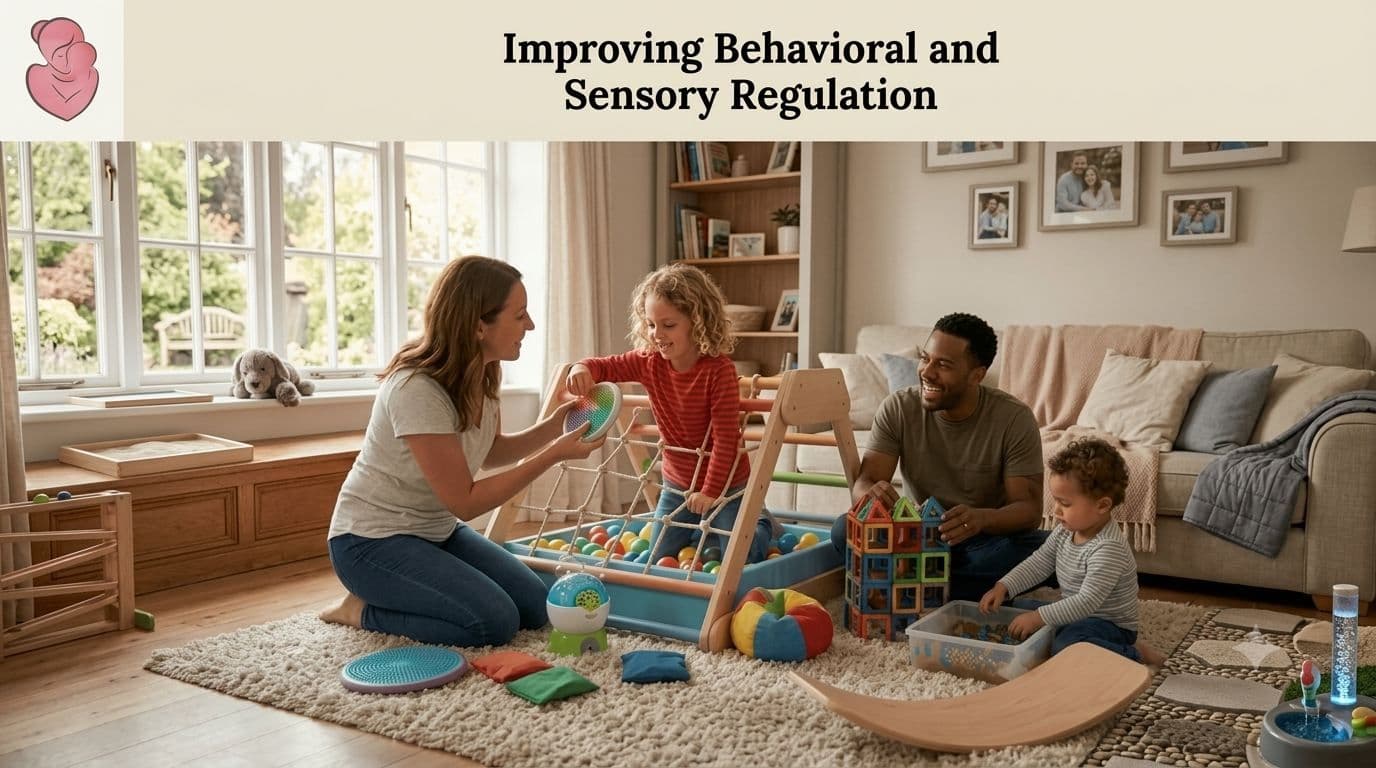
The intervention focused on improving communication, listening, sensory regulation, and emotional development through parent-led strategies incorporated into daily routines. Parents were guided to use parallel talking, bedtime stories, imaginative and incidental storytelling, sensory schedules, Dynamic, Concept, and Brilliance programs, along with regular physical activity to promote language development and engagement.
During the intervention period, encouraging progress was observed. Pinching behaviours reduced, Child M became more willing to interact with others, and remained calm throughout a family function, indicating improved emotional regulation in social settings. As therapy progressed, expressive language continued to develop, with an increase in meaningful words and communication attempts. Following reports of increased aggression after school, intervention strategies were adapted to include recall memory activities, deep compression, preparatory stage exercises, and gradual desensitization to environmental sounds such as the cooker and mixer.
After Therapy
Over the course of intervention, Child M demonstrated meaningful improvements in communication, social participation, and behavioural regulation. Increased interaction with others, reduced challenging behaviours, improved emotional regulation in community settings, and a growing vocabulary reflected positive developmental gains. While sensory sensitivities and post-school behavioural regulation remain ongoing areas of intervention, Child M has developed a stronger foundation for functional communication and adaptive participation.
Conclusion
Child M's journey highlights the importance of individualized, parent-led intervention in supporting communication, behaviour, and sensory regulation. Through consistent home-based strategies and active caregiver involvement, meaningful progress was achieved in language development, social interaction, and emotional regulation. Continued intervention will focus on expanding expressive communication, improving self-regulation across different environments, and strengthening adaptive skills for greater independence.
Disclaimer
The case studies presented in this article are based on real clinical cases. To protect client confidentiality and privacy, all identifying information, including names and personal details, has been modified or anonymized. Any resemblance to actual individuals is purely coincidental. These case studies are shared solely for educational, professional, and informational purposes, with a focus on developmental profiles, intervention approaches, and observed outcomes rather than individual identity.